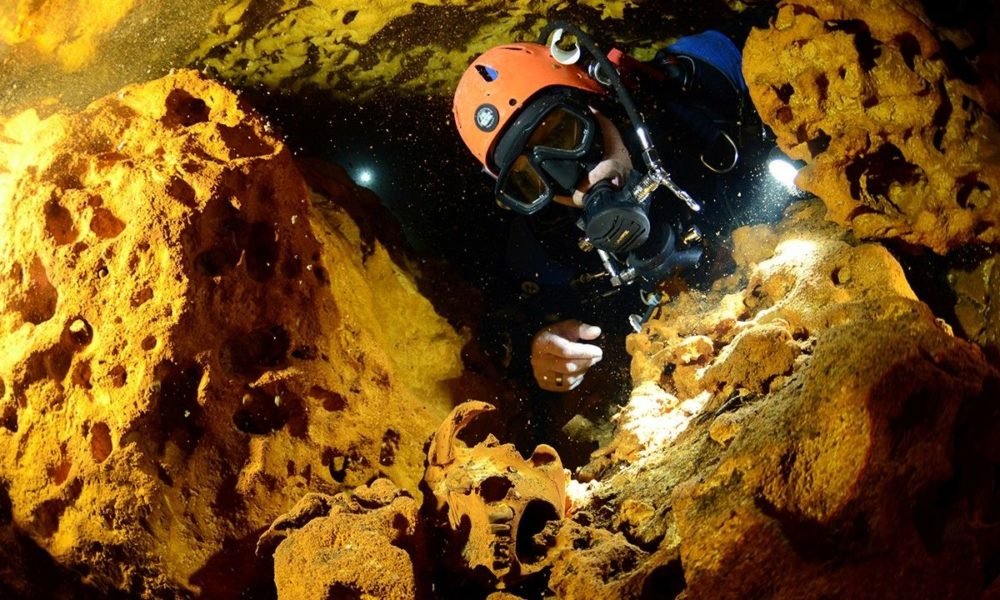
![A scuba diver looks at an animal skull at Sac Aktun underwater cave system during exploration as part of the Gran Acuifero Maya Project near Tulum, in Quintana Roo state, Mexico February 12, 2014. (Jan Arild Aaserud/Courtesy Gran Acuifero Maya Project [GAM]/Handout via REUTERS)](http://best-ranks.com/wp-content/uploads/2018/01/largest-known-underwater-cave-on-earth-discovered-in-mexico-holds-clues-to-mayan-civilization.jpg)
A scuba diver takes a look at an animal skull at Sac Aktun underwater cave system throughout expedition as part of the Gran Acuifero Maya Project near Tulum, in Quintana Roo state, Mexico February 12,2014 (JanArild Aaserud/CourtesyGran Acuifero Maya Project [GAM]/Handout through REUTERS)
A group of professionals in Mexico has discovered 2 connected underwater caverns that are more than 4,000 years of ages and form the largest known such cave on earth.
The discovery of the cave system, which extends 215 miles, might hold important details about the ancient Mayan population, which lived in parts of Mexico, the Yucatan Peninsula, and Guatemala, to name a few locations in the area.
Thecave holds numerous Mayan antiques, according to Guillermo de Anda, the director of the Gran Acuifero Maya group, which belongs to Mexico’s National Institute of Anthropology andHistory De Anda informed Reuters that the caverns are specific to shed light on how the Mayan civilization progressed.
500 YEARS LATER ON, SCIENTISTS THINK THEY’VE
SOLVED BACTERIUM SECRET THAT NEARLY ELIMINATED MEXICAN POPULATION
Without a doubt, it’s the most essential immersed historical site in the world.
“Without a doubt, it’s the most important submerged archaeological site in the world,” de Anda stated, according to Mexico Daily News.
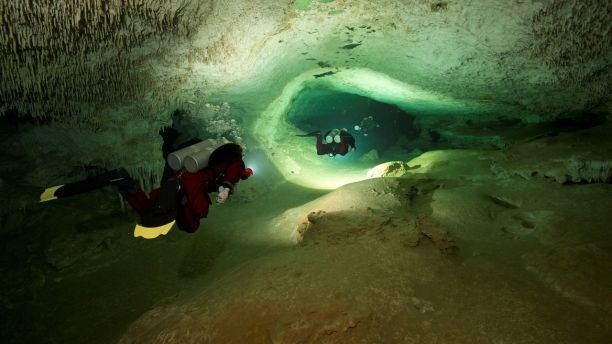
Scuba scuba divers visit an authorized location of Sac Aktun underwater cave system as part of the Gran Acuifero Maya Project near Tulum, in Quintana Roo state, Mexico January 24,2014 (HerbertMayrl/CourtesyGran Acuifero Maya Project [GAM]/Handout through REUTERS)
The connected caverns are Sac Actun and Dos Ojos.
“It allows us to appreciate much more clearly how the rituals, the pilgrimage sites and ultimately the great pre-Hispanic settlements that we know emerged,” de Anda informed Reuters.
1,000- YEAR-OLD STONE STRUCTURE IN MEXICO MAY
DEPICT DEVELOPMENT OF EARTH
Some caverns had essential spiritual significance to the Maya.
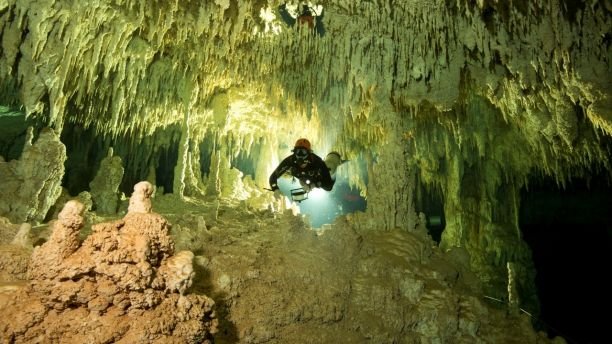
A scuba diver determines the length of Sac Aktun underwater cave system as part of the Gran Acuifero Maya Project near Tulum, in Quintana Roo state, MexicoJan 24,2014 (HerbertMayrl/CourtesyGran Acuifero Maya Project [GAM]/Handout through REUTERS)
“We’ve recorded more than 100 archaeological elements: the remains of extinct fauna, early humans, Mayan archaeology, ceramics and Mayan graves,” de Anda is priced estimate as stating in the Mexico DailyNews “It’s also very significant that this discovery enables us to see the possible patterns of past settlement. From the Pleistocene through to the ancient Mayans and up to the colonial era, they developed parallel to this enormous flooded fresh-water cave.”
The discovery caps almost a year of extreme expedition in the location.
ARCHAEOLOGISTS FIND TUNNEL THAT MAY REPLICATE
UNDERWORLD
As amazing and substantial as the finding is, it might be just part of something even bigger, de Anda thinks.
There might be, for example, other cave systems that are connected to Sac Actun, which implies “White Cave” in the Yucatec Maya language.
.